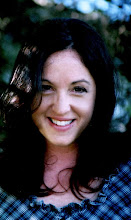
Check out this great radio segment on Frances Glessner Lee. The producer, Hannah MaCarthy is completely badass. I really enjoyed being interviewed by her. (Strange how often I said "stupid" in this interview!)
Listen to the story of Frances Glessner Lee
Thursday, June 28, 2018

Monday, June 11, 2018
Of Dolls & Murder screening at Smith Rafael Film Center

Wednesday, April 11, 2018
Frances Glessner Lee at the Bethlehem, NH Public Library
New display at Bethlehem (NH) Public Library. The Frances Glessner Lee and Nutshell Studies Collection. Love that Of Dolls & Murder made the display.


Saturday, March 24, 2018
Happy Birthday Frances Glessner Lee!

Sunday, February 25, 2018
The Nutshell Studies of Unexplained Death - Destroyed Diorama
 |
| Frances Glessner Lee and The Nutshell Studies of Unexplained Death - Destroyed Diorama |
I recently purchased a photo of Frances Glessner Lee that I had never seen before - taken in 1961. I love that she's wearing her iconic black pillbox hat. (Will they ever make a comeback?)
She's in front of her Nutshell that would eventually be accidentally destroyed when the Nutshells were moved from Harvard to the Office of the Chief Medical Examiner in Baltimore.
Of all the Nutshells to be destroyed, it's a huge shame that it was this one. It depicts the same room before and after the death scene was compromised.
If any miniaturists are up for recreating what was so horribly lost, I have all sorts of information and photos. Be in touch!
Sunday, February 11, 2018
Frances Glessner Lee - another woman who changed history
 |
We are such big fans of
Frances Glessner Lee that we made one documentary film about her and her
Nutshells, we're almost done with a second doc and I wrote a screenplay and TV pilot about her
that I'm happy to say turned out better than I could have ever imagined.
True, you didn't read about
Frances in history class and most people have no idea who she was even though
she changed the course of forensic history. But give it time. This "Patron
Saint of Forensic Science" has a legacy that's too astounding to ignore. Frances and her dystopic dollhouses took the criminal justice world by storm in the 1930s and 1940s. Despite strong-held gender biases of the era to leave police work to men, Frances became a pioneer in the new field of forensics - forever changing the course of history.
Lee is affectionately revered as the Patron Saint of Forensics, but outside of the criminal justice system today, few people know she was one of the greatest crusaders for criminal justice in the United States. As a senior citizen, she ventured into the new field of forensics or legal medicine, as it was known in the 1930s. In this era women were not widely accepted in the realms of science and criminology. Yet this didn’t stop Lee from establishing the Department of Legal Medicine at Harvard in order to elevate the field of law enforcement to a scientific level. Interestingly, at the time women weren’t allowed to attend Harvard.
On the surface, Lee played the part - impeccably - of the wealthy heiress from the Victorian era. She was also extremely intelligent, and had plenty of strong opinions, which terrified her proper parents. Lee’s father, one of the founders of International Harvester, forbade her from attending college, insisting that education was wasted on women. Her brother, of course, was able to attend college. Lee married young, had three children, and then divorced her husband, creating a major rift in the family. Without money of her own, Lee spent much of her adult life trapped under the thumb parents.
A bright spot in Lee’s life was her friendship with Dr. George Magrath. She was introduced to him when her brother and Magrath attended Harvard together. Lee was fascinated with his controversial career as a medical examiner in Boston, which often landed him on the front page of newspapers – embroiled in controversy. Lee and Magrath spent many late nights talking through details of crime scenes and grisly murders. Through him, Lee took on his fight to better educate police detectives in processing/investigating crime scenes from a medical perspective.
In a stroke of genius, Lee created a miniature world of murder and intrigue with her Nutshell Studies of Unexplained Death – dollhouses used to help train detectives in a seminar series of her own design. She wanted to give detectives a tool to look closer at murders, accidental deaths, and suicides because they are not always what they appear. In the process of co-opting this accepted feminine pastime, making miniatures, Lee gained widespread admiration in fields dominated by men.
The death of her dear friend, Dr. Magrath, deepened her commitment to educating law enforcement and reforming the antiquated coroner system. Lee went on to become the first woman member of the American Academy of Forensic Sciences and an honorary police captain in the New Hampshire State Police, with full rights and privileges.
In her later years, Lee continued to surprise people and do the unexpected.
She corresponded with J. Edgar Hoover and became ever vigilant in reporting any suspicious communist activity in the height of the “Red Scare.” Lee also became close with author Erle Stanley Gardner, famous for his Perry Mason novels, after he attended her seminar series. One of his novels, The Case of the Dubious Bridegroom is dedicated to her. Around the same time, Lee, a lifelong atheist who believed only in science, converted to Catholicism.
In 1962, at the age of 83, Lee died in Littleton, New Hampshire. Hundreds of members of law enforcement from all over the United States and Canada came to pay their respects. The organization Lee founded in 1944, the Harvard Associates of Police Science, is still in operation today, holding conferences and seminar series. And her Nutshells Studies are a still used as a much-protected teaching tool at the Maryland Office of Chief Medical Examiner. When homicide investigators and forensic experts gather, they always toast the woman that pioneered the field.
Want to know more? You will. Soon.
Frances Glessner Lee and why I still care. (repost)
Over
the years of working on several different film projects on Frances
Glessner Lee, I've become the unofficial keeper of her history. And I'll
keep her history until history stops forgetting her.
A few years back, I made the documentary film Of Dolls & Murder about Frances and her extraordinary Nutshell Studies of Unexplained Death. I was so captivated by this woman who is as mysterious as her Nutshells.
Her imagination. Her talent.
Her sheer genius. How could the world not know about her? Sadly, I think
I know the answer. From the 1930s until her death in 1962, a relatively
small group of people respected and acknowledged her enormous
contributions in early forensic science. And those people were the men
who attended HAPS (Harvard Associates in Police Science)
- the seminar series she created to help foster relationships between
law enforcement and the medical community in the pursuit of justice.
Everyone else generally dismissed Frances. Especially her colleagues at Harvard. A lot of people placated her only because she donated so much money to the Department of Legal Medicine at Harvard - where she was generally viewed as a meddlesome old woman with money and not enough to do. (Her words)
She was a truly woman ahead of her time and this threatened people. She never gave up and this irritated people. Things were rarely good enough for her and people resented her for it.
And when she died, the forensic academic community - the community she helped pioneer - allowed her name and contributions to fade away because they simply didn't think she was worthy of credit.
HAPS members, however, are another story. They keep her memory alive. But memories aren't quite enough for a screenwriter and documentary filmmaker like me, are they? I needed photos, documents, newspaper articles, letters, and interviews with family members and people who can speak to her impact on criminology.
When my filmmaking partner and I made Of Dolls & Murder, we had to partially abandon our original vision because we could not find enough of the kind of information I listed above. We were proud of what we created but regretted that we couldn't find enough details about Frances Glessner Lee's life.
So I started to fantasize about the Hollywood version of her life - staring some amazing actress like Cate Blanchett as Frances Glessner Lee. So I wrote the screenplay, Dollhouse of Death and it turned out better than I could have ever imagined. If this film ever gets made, there is no way history could ever forget about Frances Glessner Lee again.
And now we are almost done with our follow up documentary Murder in a Nutshell because we were lucky enough to unearth some pretty compelling new material about Frances Glessner Lee.
Her story just keeps getting better and better. Frances spoke so eloquently for the dead and I feel privileged to speak eloquently for her.
A few years back, I made the documentary film Of Dolls & Murder about Frances and her extraordinary Nutshell Studies of Unexplained Death. I was so captivated by this woman who is as mysterious as her Nutshells.
 | |
| The one and only Frances Glessner Lee |
Everyone else generally dismissed Frances. Especially her colleagues at Harvard. A lot of people placated her only because she donated so much money to the Department of Legal Medicine at Harvard - where she was generally viewed as a meddlesome old woman with money and not enough to do. (Her words)
She was a truly woman ahead of her time and this threatened people. She never gave up and this irritated people. Things were rarely good enough for her and people resented her for it.
And when she died, the forensic academic community - the community she helped pioneer - allowed her name and contributions to fade away because they simply didn't think she was worthy of credit.
HAPS members, however, are another story. They keep her memory alive. But memories aren't quite enough for a screenwriter and documentary filmmaker like me, are they? I needed photos, documents, newspaper articles, letters, and interviews with family members and people who can speak to her impact on criminology.
When my filmmaking partner and I made Of Dolls & Murder, we had to partially abandon our original vision because we could not find enough of the kind of information I listed above. We were proud of what we created but regretted that we couldn't find enough details about Frances Glessner Lee's life.
So I started to fantasize about the Hollywood version of her life - staring some amazing actress like Cate Blanchett as Frances Glessner Lee. So I wrote the screenplay, Dollhouse of Death and it turned out better than I could have ever imagined. If this film ever gets made, there is no way history could ever forget about Frances Glessner Lee again.
And now we are almost done with our follow up documentary Murder in a Nutshell because we were lucky enough to unearth some pretty compelling new material about Frances Glessner Lee.
Her story just keeps getting better and better. Frances spoke so eloquently for the dead and I feel privileged to speak eloquently for her.
 |
| One of the Nutshell Studies of Unexplained Death by Frances Glesssner Lee - photo by Susan Marks |
Subscribe to:
Posts (Atom)