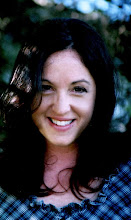
This is Carly at HDMG mixing the sound on Of Dolls and Murder.
 This is what Of Dolls and Murder sounds like.
 This is Carly at HDMG mixing the sound on Of Dolls and Murder.This is what Of Dolls and Murder sounds like.
 Are you curious to know a bit more about the inspiration of our film? In a nutshell, here's a little background on the Nutshell Studies of Unexplained Death:
The Nutshell Studies of Unexplained Death
Created in the 1930s and 1940s, The Nutshell Studies of Unexplained Death are a series of eighteen intricately designed dollhouse-style dioramas. The creator, Frances Glessner Lee, was a millionaire heiress who is affectionately known as the “Patron Saint of Forensic Science.”
Lee designed these detailed scenarios, based on composites of actual cases, to help train detectives sharpen their investigative skills. Each Nutshell contains a doll corpse (or several) in a death scene that could be easily misinterpreted.
The dioramas first were used in the 1940s for a law enforcement lecture series known as the Harvard Associates of Police Science (HAPS) through the Harvard Legal Medicine department. In 1966, when the department dissolved, the Nutshells went to the Maryland Office of the Chief Medical Examiner (OCME), where they are on permanent loan. The Nutshells are still used today as teaching tools in the HAPS seminar series that Lee founded.
Originally, Lee and her carpenters created 20 Nutshells. One was destroyed in transit to the Maryland OCME and another is missing. The Nutshells are not open to the general public, nor are the solutions available in order to preserve their integrity as a teaching tool.
The scale of the Nutshells is 1:12 inches.

I get a lot of questions about the heroine of our film, Frances Glessner Lee, so here's a quick overview of her life. Keep checking back for more Frances Glessner Lee posts. We have a lot more to share about this woman of mystery.
Frances Glessner Lee
(1878 – 1962)
By all accounts Captain Frances Glessner Lee was a genius, an artist, a scientist, and light years ahead of her time. As the heiress to the International Harvester fortune, Lee spent much of her life stymied by societal pressures and family expectations. Yet she was able to contribute greatly to the scientific and criminal justice realms in an extremely captivating and eloquent way.
Born in Chicago in 1878, Lee grew up on 1800 South Prairie Avenue. Her house is now a historic house museum. Lee’s parents, John and Frances Glessner, forbade their only daughter from attending college. Lee’s brother, George, however, attended Harvard. This injustice didn’t waylay Lee’s ambitions, it just postponed them.
George introduced Lee to his Harvard classmate, George MaGrath, who became close with the Glessner family. MaGrath, in turn, introduced Lee to the concept that police detectives weren’t properly trained to process crime scenes for medical evidence. At the time, in the 1890s, forensics was called Legal Medicine and it was a very new concept. Lee and MaGrath would eventually join forces to popularize forensics in the United States.
At age 20, Lee married Blewett Lee – an attorney. The marriage was an unhappy one. While three children resulted from their union, the couple separated for many years and ultimately divorced.
While raising her children, Lee also nurtured an interest in creating miniatures, which was considered an acceptable pastime for socialites. By the time Lee was a grandmother, she had combined her pastime with her passion for murder mystery into creating the Nutshells Studies of Unexplained Death. She also donated $250,000 to establish a Legal Medicine program at Harvard in 1932. She literally paid for her friend George MaGrath’s salary as department chair. Her continued interest led to a donation of over 1,000 books and manuscripts, which became the MaGrath Library of Legal Medicine.
The Nutshells were used in a popular seminar series Lee founded, the Harvard Associates of Police Science (HAPS), to help train detectives to sharpen their investigative skills.
For her contributions to forensics, Lee was appointed State Police Captain in New Hampshire in 1943. She was an honorary captain at first, but then she went on to get all the rights and privileges of a police captain. Lee was the first female member of the American Academy of Forensic Sciences, which is the leading forensic science organization in the world. She was also the first woman invited into the International Chiefs of Police Association.
Throughout the 1940 and 1950s, Lee continued with her well-attended HAPS seminars where she earned the respect of the attendees for her dedication to the pursuit of justice. Author Erle Stanley Gardner attended Lee’s HAPS seminars for research with his Perry Mason novels. To show his appreciation, he dedicated his novel The Case of the Dubious Bridegroom, to Lee.
When Lee died in 1962, hundreds of mourners, including several hundred police officers and members of the Royal Canadian Mounted Police, attended her funeral.
The film Of Dolls and Murder is dedicated to her memory.
 2011 has been busy for Of Dolls and Murder. So far we've recorded filmmakers' commentary for the DVD extra or "Bonus Feature." It was a blast! John Kurtis Dehn, Matt Ehling, myself, and Carly Zuckweiler poured some drinks and recorded our commentary at HDMG.
 We wish the best to you and yours this holiday season. May all your holiday gatherings be homicide free!